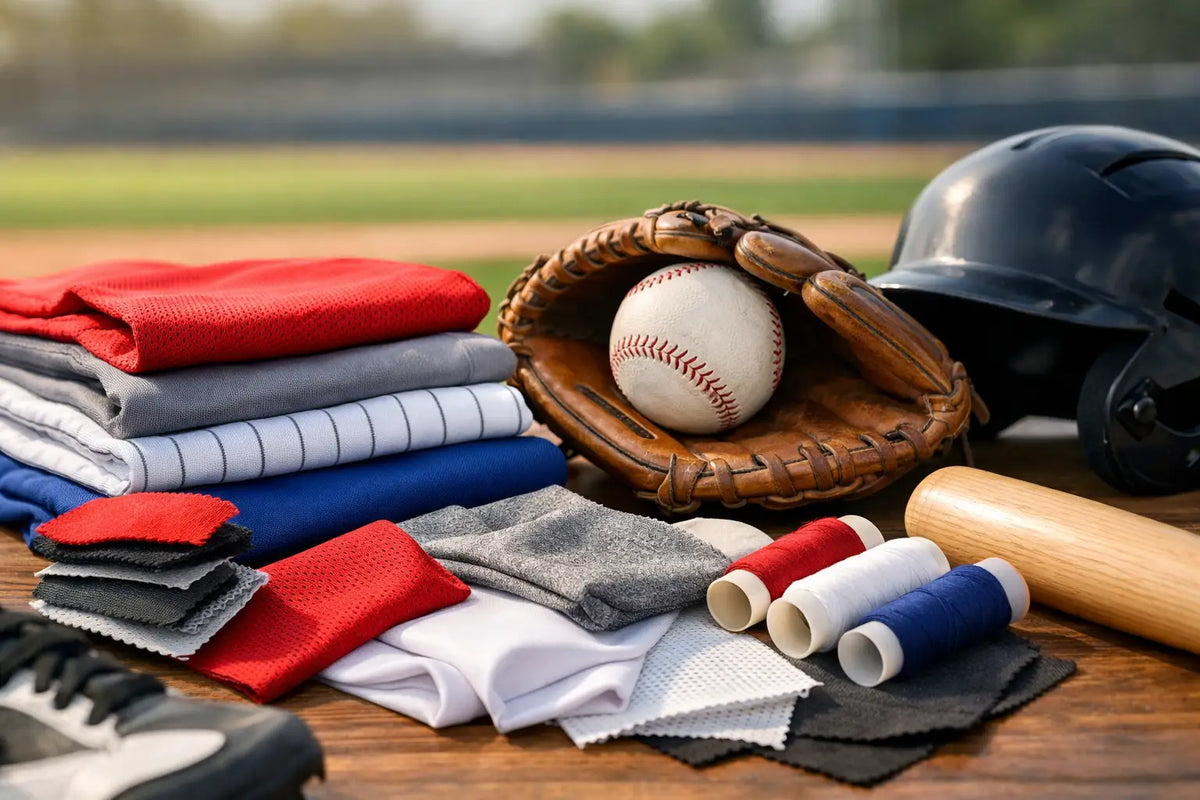
That shirt that feels great during warmups can become a heavy, sticky problem by the fifth inning. The wrong pants can grab sweat, restrict your stride, or wear thin after a few hard slides. This baseball apparel materials guide cuts through the fabric tags so players and parents can choose gear that stays ready when the game gets long.
Baseball apparel has to do more than look clean under the lights. It needs to move through swings, throws, sprints, slides, and heat. The best material is not always the softest one or the lightest one. It is the one built for your position, your climate, and how hard you play.
Baseball Apparel Materials Guide: Start With Performance
Most performance baseball apparel starts with synthetic fibers. That is not an accident. Polyester, nylon, and spandex are built to manage the demands cotton alone cannot handle: sweat, friction, repeated washing, and full-range movement.
The material label matters, but construction matters too. A lightweight polyester jersey with breathable mesh panels performs differently than a dense polyester pullover. A pair of pants with a touch of stretch can change how free you feel when you get low at shortstop or drive out of the box.
Think about your hardest moments, not just how the apparel feels in the store. If you play in summer tournaments, sweat management should lead the decision. If you slide often or play on rough infields, durability needs more weight. Cold-weather players need layers that add warmth without turning every swing into work.
Polyester: The Everyday Workhorse
Polyester is the backbone of modern baseball shirts, training tops, pants, and outerwear. It is lightweight, durable, and quick to dry. Unlike cotton, polyester does not hold onto sweat for long, which helps keep apparel from becoming heavy during a doubleheader.
For jerseys and practice shirts, look for polyester with moisture-wicking performance. Wicking fabric pulls sweat away from the skin and spreads it across the surface so it can evaporate faster. That can help a player feel drier, especially under a helmet, chest protector, or warmup jacket.
The trade-off is feel. Some lower-quality polyester can feel slick, stiff, or trap odor after repeated wear. Better polyester fabrics are usually softer and may use textured yarns or ventilation zones to improve airflow. Wash them soon after use and avoid heavy fabric softener, which can coat fibers and weaken their moisture-moving ability.
Spandex: The Difference Between Wearing It and Moving In It
Spandex, also called elastane, gives baseball apparel stretch. You will usually see it blended into polyester pants, compression shorts, sliding gear, fitted shirts, and athletic socks. Even a small percentage can make a major difference in mobility.
For baseball pants, stretch matters most through the hips, seat, knees, and thighs. A player should be able to squat, take a full stride, and slide without feeling fabric pull across the legs. Pants with four-way stretch move both side to side and front to back, making them a strong choice for athletes who demand a full athletic range.
More stretch is not automatically better. A high-spandex fabric may feel great at first but can lose shape if the garment is poorly made or washed too aggressively. Look for stretch as part of a durable blend, not as a substitute for solid construction.
Nylon: Built for Contact and Abrasion
Nylon earns its spot when durability is the priority. It is tough, smooth, and resistant to abrasion, making it useful in sliding shorts, windbreakers, protective layers, and apparel built for heavy field use.
If you are the player who comes home with dirt packed into every seam, nylon can be a smart addition to your lineup. It handles contact well and often feels lighter than its strength suggests. Many protective compression garments use nylon blended with spandex because the combination can stay close to the body while holding up against repeated movement.
Nylon can hold warmth more than lightweight polyester, so it may not be the first choice for a hot, humid afternoon. It shines when there is wind, cool weather, or a need for added durability beneath your uniform.
Cotton Has a Place, Just Not Everywhere
Cotton feels soft, breathable, and familiar. It is a solid choice for team travel, postgame wear, casual training, and lighter recovery days. A cotton tee also brings a classic look that never misses.
But cotton absorbs moisture and dries slowly. Once it is soaked with sweat, it can feel heavy and cling to the body. For a player grinding through a summer practice, that is a disadvantage. Pure cotton is usually not the move for a game jersey, compression layer, or any piece expected to manage serious sweat.
Cotton-poly blends can offer a better middle ground for lifestyle apparel and relaxed training. They keep some softness while improving durability and drying time. Save the all-cotton favorites for off-field swagger. Bring performance fabric when it is time to compete.
Mesh and Ventilation Keep the Pressure Down
Mesh is not a fabric type as much as a construction designed for airflow. You will find it in jersey side panels, the backs of caps, pockets, liners, and training tops. It helps heat escape from high-sweat areas without forcing the whole garment to become thin or fragile.
For players in hot states or summer travel ball, ventilation can make a real difference. Look for mesh under the arms, along the back, or behind the knees. Those areas trap heat fast, particularly when a player is wearing multiple layers of gear.
Mesh has a limit. It is more vulnerable to snags than dense fabric, and too much mesh can reduce durability. The best designs place it where airflow matters most while keeping tougher material in slide zones and high-contact areas.
Choose Materials by Role, Not Hype
A complete baseball bag does not need every item made from the same fabric. Build around the job each piece has to do.
- Game jerseys and practice tops: Moisture-wicking polyester with targeted mesh is a strong all-around choice.
- Baseball pants: Polyester with spandex offers durability, shape retention, and freedom to sprint and slide.
- Compression shorts and fitted layers: Nylon-spandex or polyester-spandex blends provide stretch and a secure feel under the uniform.
- Cold-weather layers: Brushed polyester, fleece blends, or lightweight nylon shells add warmth and wind resistance without oversized bulk.
Fit and Fabric Work Together
The best material cannot fix bad fit. Apparel that is too loose can bunch under protective gear, catch during slides, and feel distracting during a swing. Apparel that is too tight can limit motion and make heat build up faster.
Baseball players need enough room to rotate, reach, and explode. Test pants with a squat and a lunge. Test shirts by mimicking a throwing motion. Check whether compression gear stays in place when moving, not just when standing still.
Seams deserve attention too. Flat seams are less likely to rub or chafe during long practices. Reinforced knees and double stitching can extend the life of pants for players who treat every dirt patch like an invitation. Those details are where performance apparel proves itself over a full season.
Make Good Gear Last Longer
High-quality materials still need smart care. Turn printed apparel inside out before washing, use cold water when possible, and skip high heat in the dryer. High heat can damage elastic fibers, shrink certain blends, and wear down graphics over time.
Do not leave sweaty gear sealed in a bag overnight. That is how odor settles in and fabrics break down faster. Air it out after practice, then wash it as soon as you can. Keep extra socks, compression layers, and training shirts in rotation so no single piece gets punished every day.
Your apparel should not be an afterthought. It is part of how you move, recover, and show up prepared. Choose materials that match your grind, wear them with confidence, and step onto the field ready to #BeAForce.