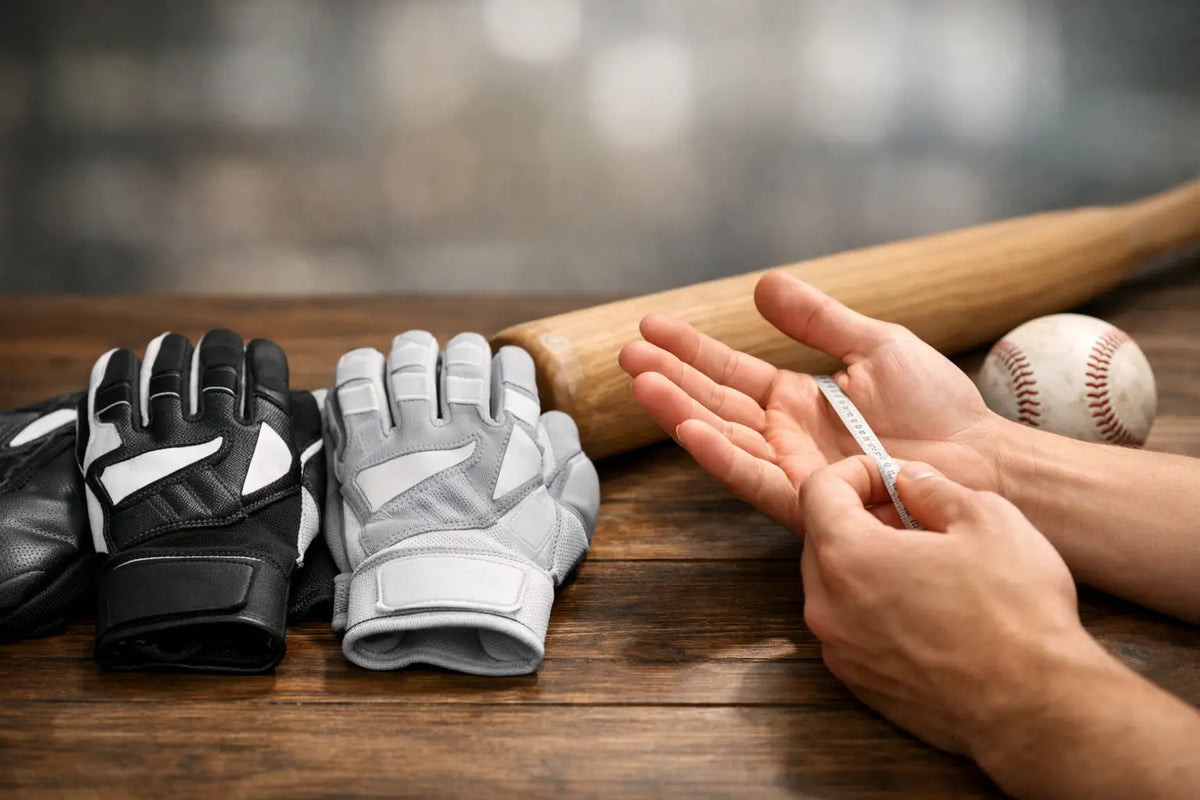
That first hard swing in the cage tells you a lot. If the bat feels like it might shift in your hands, if your palms start heating up after a few rounds, or if one bad sting makes you ease up on contact, you feel it right away. That is exactly where what batting gloves do for hitters starts to matter - not as a style extra, but as real performance gear.
A good pair of batting gloves helps a hitter hold the bat more securely, stay comfortable longer, and keep the hands protected through repeated swings. That sounds simple, but for baseball players, simple matters. Hitting is built on timing, confidence, and repeatable mechanics. If your hands are distracted, your swing usually follows.
What batting gloves do for hitters at the plate
The most obvious job batting gloves do is improve grip. When your hands get sweaty, when the handle gets slick, or when weather changes the feel of the bat, gloves create a more stable connection between your hands and the handle. That does not mean every hitter suddenly swings harder just because gloves are on. It means the bat is less likely to move around at the wrong moment.
That small detail can clean up a lot. Better grip can help hitters keep consistent hand placement, especially through multiple at-bats or long practice sessions. It can also reduce the instinct to squeeze too tightly. That matters because overgripping the bat can create tension in the forearms and shoulders, and tension is not your friend when you are trying to stay quick through the zone.
Batting gloves also protect the skin on your hands. Repeated swings create friction, and friction turns into hot spots, blisters, callus tears, and raw palms. Once that happens, hitters start making little adjustments without even realizing it. They shift pressure, avoid full effort, or change how they hold the bat. None of those are winning moves.
Then there is sting management. Batting gloves are not a magic shield against getting jammed, but they can take the edge off vibration on mishits. For younger players especially, that can be a big deal. A player who is worried about hand sting is less likely to attack the ball with confidence.
Grip matters more than most hitters realize
A lot of players think grip is only about not dropping the bat. It goes deeper than that. Grip affects control, and control affects the path of the barrel. If the bat feels secure, hitters can stay loose and let the swing work. If the bat feels unstable, they often compensate by squeezing harder or getting mechanical.
That is why batting gloves can be useful even for hitters who already have strong hands. Strong hands are great. Consistent feel is better. Gloves can help create the same general contact point between hand and handle from swing to swing, whether you are in batting practice, in a game, or standing in a humid on-deck circle waiting for your turn.
There is a trade-off here, though. Not every hitter likes the same amount of tack or thickness. Some players want maximum feel and a thinner palm. Others like a little more padding. The right glove is not just the one with the best look. It is the one that lets you stay connected to the bat without making your hands feel bulky.
Hand protection is a performance issue, not a comfort issue
Players sometimes treat hand protection like a bonus. It is more than that. If your hands are beat up, your swing quality drops. That goes for cage work, tee work, front toss, and games.
Think about how many swings serious players stack in a week. Hundreds add up fast. Even if one swing does not hurt, the total wear does. Batting gloves help spread and soften some of that friction so your hands can hold up over time. For youth and high school hitters still building strength and tolerance, that can make a huge difference.
Parents notice this part quickly. A player who avoids practice because of blisters is losing reps. A player who can train without tearing up their hands has a better chance to improve. Durability in your gear supports durability in your routine.
Confidence is part of what batting gloves do for hitters
Baseball players know confidence is never just mental talk. Confidence usually comes from preparation and feel. When a hitter steps in feeling locked in, comfortable, and ready to fire, that matters.
Batting gloves can contribute to that feeling more than people admit. They create a game-ready routine. Strap them on, tighten the fit, pick up the bat, and now it is time to compete. That mental switch is real. Athletes build performance habits around gear all the time.
There is also a style factor, and that should not be brushed off. Looking sharp is not the same as playing well, but feeling like yourself on the field has value. Players want gear that performs and carries some swag. When your equipment matches your energy, you walk into the box with a little more edge. That is not fluff. It is part of showing up like you belong there.
When batting gloves help the most
Some hitters can go barehanded and feel fine for a while. That does not mean gloves are unnecessary. It usually means the need shows up in specific situations.
Cold weather is one. When conditions are cooler, hands can get stiff and lose feel. Batting gloves help maintain comfort and keep the bat from feeling harsh on contact. Hot and humid conditions are another. Sweat changes grip fast, and gloves can help hitters avoid that slippery handle feeling.
Long tournaments, doubleheaders, and heavy practice weeks are where batting gloves really earn their spot. The more swings you take, the more valuable hand protection and grip consistency become. Young players moving from short practice sessions into more serious schedules often notice this first.
Players coming back from hand irritation or minor skin damage may also benefit more than expected. Gloves will not fix bad technique or poor bat fit, but they can reduce extra aggravation while the hands recover.
What batting gloves cannot do
Batting gloves help, but they are not a cheat code. They will not improve pitch recognition. They will not fix a late load, poor balance, or a swing path that keeps getting under good velocity. If a hitter expects gloves to add instant exit velo on their own, they will be disappointed.
They also are not one-size-fits-all. A glove that slips, bunches up, or wears out too quickly can become a distraction instead of an advantage. Fit matters. Material quality matters. Construction matters. If the glove feels stiff in the wrong spots or too loose around the fingers, the benefit drops fast.
Some hitters also prefer training barehanded at times to build feel and hand awareness, then wearing gloves in games. That is a reasonable approach. It depends on the player, the volume of swings, and how their hands respond.
What hitters should look for in batting gloves
The best batting gloves for hitters usually come down to three things: grip, fit, and durability. Grip should feel secure without feeling sticky to the point that the bat handle cannot move naturally in your hands. Fit should be snug, especially through the palm and fingers, without cutting off movement. Durability matters because gloves that break down early lose both feel and value.
Breathability is worth paying attention to too. If gloves trap too much heat and sweat, comfort drops. Wrist closure matters more than many players think as well. A secure wrist helps the glove feel locked in instead of shifting during swings.
And yes, style matters. If you are going to wear them every day, they should look the part. Performance comes first, but there is nothing wrong with wanting gear that makes a statement. That is part of competing with presence. Brands like Vi Athletics understand that hitters want both function and force.
The bottom line for players and parents
What batting gloves do for hitters comes down to better connection, better protection, and better confidence. They help the bat feel secure, reduce hand damage from repeated swings, and support a more comfortable, repeatable hitting experience. For some players, that edge is small. For others, especially those taking high swing volume, it is a real difference-maker.
The key is to think of batting gloves the same way you think of any serious baseball gear. They should help you perform, hold up under pressure, and make you feel ready to compete. If your hands are one of the main points of contact in the swing, they deserve gear that can keep up.
The best setup is the one that lets you step in the box feeling steady, protected, and ready to do damage.