A bad pair of batting gloves tells on you fast. The grip slips when your hands sweat, the palm bunches at contact, and by the third cage round you’re already adjusting instead of attacking. If you’re figuring out how to choose batting gloves, start with one rule: they should help you forget they’re there.
The right pair is part comfort, part control, and part confidence. You want gloves that feel locked in without feeling stiff, hold up through swings and reps, and match the way you actually play. Some hitters want maximum feel on the bat. Others want more padding, more structure, or more durability for long practices and weekend tournaments. The best choice depends on your hands, your swing habits, and how much wear you put on your gear.
How to choose batting gloves for your swing
Most players shop batting gloves by look first. Nothing wrong with wanting clean style and real swag. But performance starts with fit and material, because those two things shape almost everything else - grip, comfort, durability, and feel at contact.
If you’re a contact hitter who values bat control and hand feel, a thinner palm usually makes more sense. You’ll feel the handle better, and the glove won’t get in the way of quick adjustments. If you take a lot of reps and hit with more force, a slightly more structured glove can be the smarter play. That little bit of reinforcement can help the gloves last longer and keep your hands fresher through heavy sessions.
Weather matters too. In hot conditions, breathability becomes a bigger deal than most players expect. Gloves that trap heat get slick fast. In cooler spring games, some players prefer a slightly thicker feel so their hands don’t feel dead on the bat. There isn’t one perfect build for everyone. There’s the pair that matches your game.
Start with fit, not hype
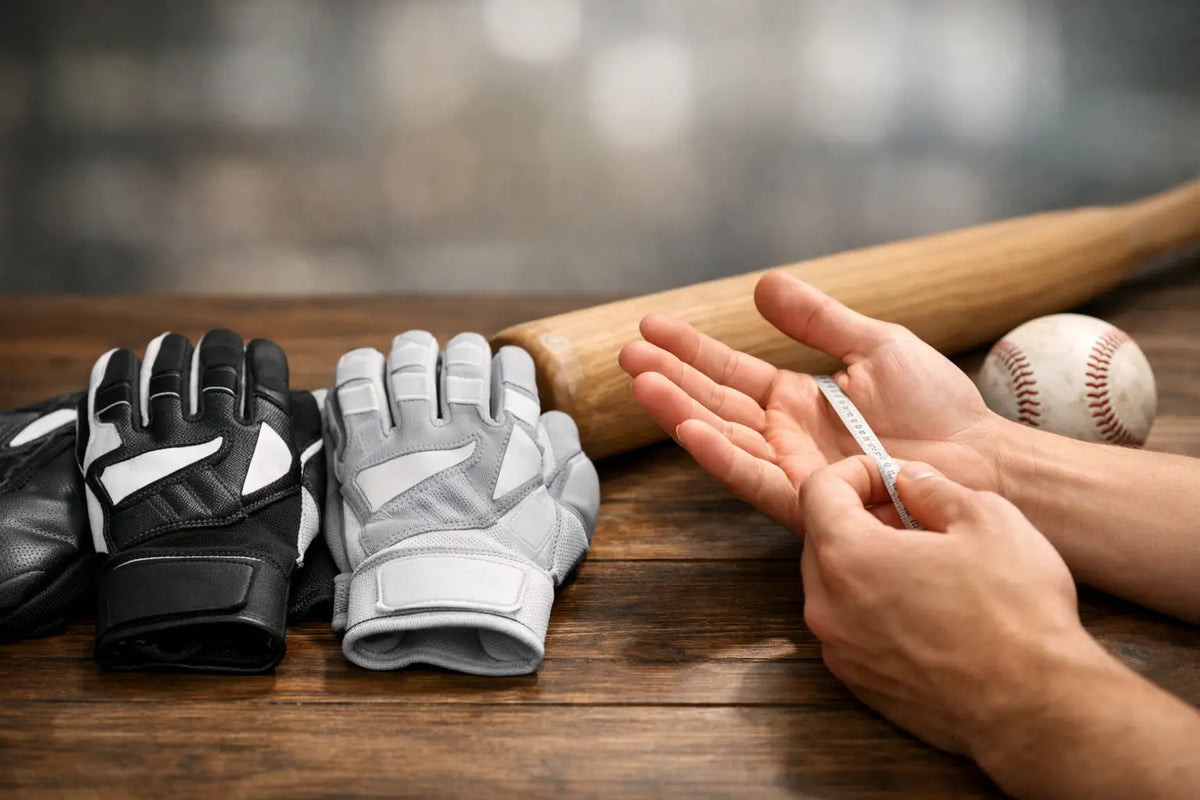
Fit is where good batting gloves separate themselves from gloves that just look good in the package. A proper fit should feel snug across the palm and fingers without cutting off movement. You shouldn’t have extra material hanging at the fingertips, and you definitely shouldn’t feel the glove pulling hard when you close your hand around the bat.
Too loose, and the glove shifts during the swing. That creates friction, blisters, and inconsistent grip. Too tight, and you lose comfort fast, especially during multiple at-bats or long cage work. Tight gloves also wear out sooner because the material stays under constant strain.
Pay attention to finger length as much as palm width. A lot of players focus only on whether the glove feels tight around the hand, but if the fingers are too long, you’ll lose that connected feel on the handle. Younger players especially end up in gloves they’ll “grow into,” which usually means playing in gloves that never feel right.
A good test is simple. Put the glove on, make a fist, then grip an imaginary bat. The glove should move with your hand, not fold awkwardly or pull across the knuckles. If it feels natural right away, that’s a strong sign.
Wrist closure matters more than most players think
The wrist strap does more than finish the look. It helps keep the glove stable through the swing. A solid closure gives you a secure feel without needing to overtighten the whole glove.
If the strap is weak or the closure loses hold over time, the fit gets sloppy even if the glove itself still looks fine. Players who swing hard or practice often usually notice this first. The glove starts rotating slightly, and your grip never feels as clean after that.
Pick the right palm material
Palm material changes the whole experience. This is where the trade-offs show up clearly.
Leather palms are popular for a reason. They usually deliver a softer, more natural feel and a strong grip on the bat. Many players love the way leather breaks in and forms to the hand over time. The trade-off is that some leather gloves wear down faster if you’re taking daily reps, especially if you don’t take care of them.
Synthetic palms can offer strong durability and weather resistance. They often hold their shape well and can be a smart choice for players who practice a lot or need something more budget-friendly. The trade-off is feel. Some synthetic gloves just don’t give you that same connected, game-ready grip that a quality leather palm can.
For many hitters, the answer comes down to priority. If feel is everything, lean toward premium leather. If durability and easy maintenance matter most, synthetic or blended materials may fit better.
Decide how much padding you actually want
More padding sounds better until it changes your grip. That’s why this choice needs honesty.
If sting from inside pitches or mishits is a real issue, some added padding can help. It can also make long batting practice sessions more manageable, especially for younger players still building strength in their hands. On the other hand, too much padding can mute feel and make the bat handle seem less precise.
A lot of hitters perform best with moderate protection instead of maximum cushioning. Enough to reduce friction and absorb some shock, but not so much that the hands feel disconnected. If you rely on touch and barrel control, lighter is often better. If your hands take a beating, a little more protection can be worth it.
Batting gloves should feel game-ready, not bulky
Bulk is usually the enemy. The best batting gloves feel athletic, not heavy. You want support without stiffness and protection without losing fast hands.
That balance is especially important for younger players and high school athletes still dialing in mechanics. Gloves should support confidence, not become another thing to manage in the box.
Breathability and durability go together
A glove that gets soaked with sweat can break down quicker and lose grip when you need it most. Breathable panels, flexible backing materials, and quality stitching all matter here.
Look closely at the back of the hand. That area plays a big role in ventilation and mobility. If the glove flexes naturally and lets heat escape, it’s more likely to stay comfortable over multiple innings or extended training sessions. This isn’t just a comfort feature. It affects control.
Durability shows up in the seams, the palm, and the stress points between the thumb and index finger. That area gets worked hard every swing. If gloves fail early, it often starts there. Players who hit a lot should pay extra attention to reinforcement in high-wear spots instead of focusing only on colorway and branding.
Style matters - just don’t let it make the call
Let’s be real. Style matters in baseball. If your gear looks sharp and matches your energy, you step in feeling different. Confidence is part of performance. There’s nothing soft about wanting batting gloves with real presence.
But style should be the tiebreaker, not the first filter. Find the pair that fits your hand, supports your swing, and holds up under pressure. Then pick the look that matches your game. That’s how you get both performance and swag.
For a lot of players, the sweet spot is a glove that looks clean enough for game day and tough enough for daily work. That’s the standard. Anything less is just extra flash.
How to choose batting gloves for youth players
If you’re buying for a younger athlete, resist the urge to size up too much. Kids need control and comfort more than “room to grow.” A glove that’s too big can bunch in the palm, slip at the fingers, and make it harder to build good habits.
Youth players also tend to benefit from a straightforward design. Soft feel, secure wrist closure, decent breathability, and enough durability for practices and games. They don’t need unnecessary bulk. They need a glove that helps them grip the bat confidently and stay focused.
Parents should also think about use case. One pair for occasional games is different from one pair expected to survive constant team practices, lessons, and backyard reps. The more swings a player takes, the more durability needs to move up the priority list.
When to replace your batting gloves
Even a strong pair won’t last forever. If the palm is smoothing out, the grip feels slick, the fingers are stretching, or the wrist closure is losing its hold, performance is already dropping. Holes are the obvious sign, but you don’t need to wait for visible damage to know the gloves are done.
Trust feel. If you’re adjusting your hands more, noticing bunching, or feeling more vibration than usual, your gloves may be costing you quality swings. Fresh gear won’t fix mechanics, but worn-out gloves can absolutely get in the way.
The best batting gloves don’t just complete the uniform. They help you own the box. Choose the pair that fits right, grips clean, and holds strong when the game speeds up - then go hit like you mean it.