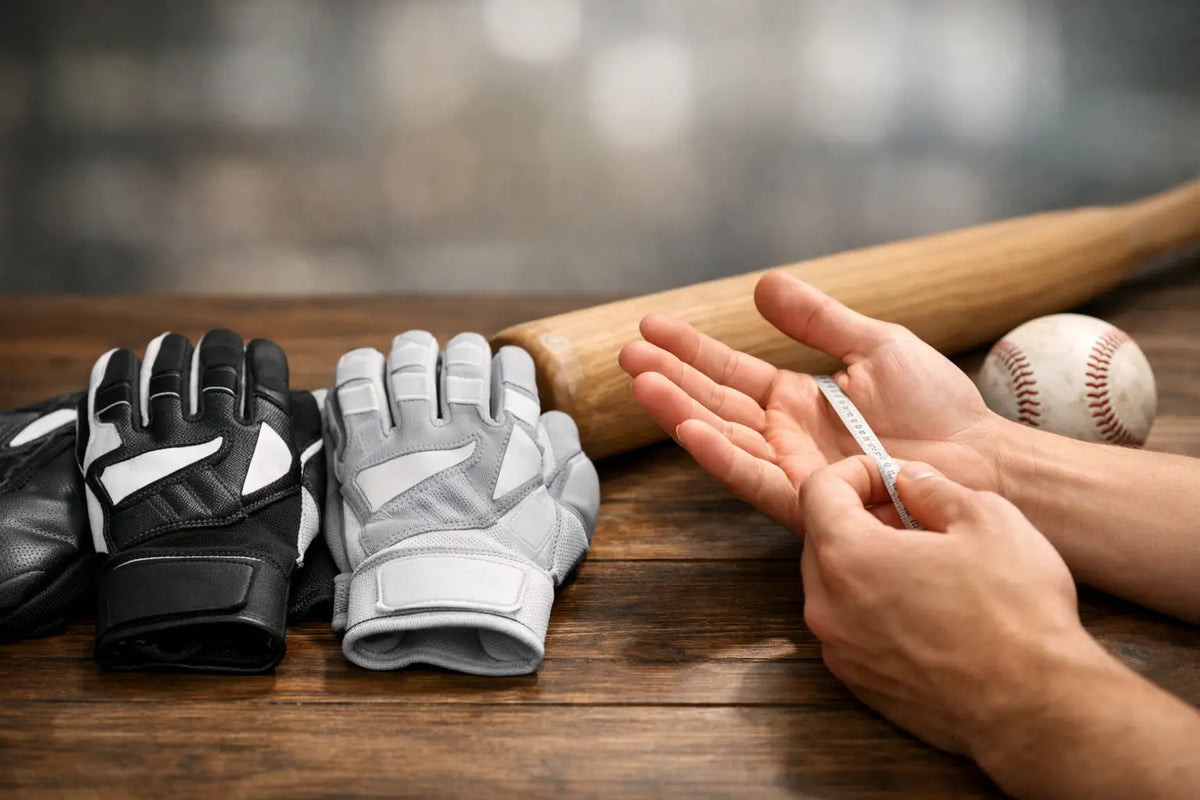
A baseball can feel small in your hand until the game speeds up. Then every detail matters. If you want to know how to grip baseball properly, start with this: the best grip is the one that gives you control first, then lets you add velocity, spin, or movement without fighting the ball.
A lot of players grip the ball too deep in the palm, squeeze too hard, or place their fingers on the seams without understanding why. That usually leads to wild throws, dead spin, and a release that feels inconsistent. Clean grip, clean release. That is where force starts.
Why proper grip changes everything
Your grip affects more than how the ball feels. It changes the spin axis, how quickly the ball leaves your hand, how much touch you have on short throws, and how much carry you get on longer ones. Even fielders who are not throwing breaking balls still need a reliable grip because transfer and release happen fast.
The trade-off is simple. A grip built for maximum speed may not give you the same feel as a grip built for pure command. Younger players especially should lean toward comfort and repeatability before trying to force movement or chase extra velocity.
If your hand is tense, your forearm usually follows. When that happens, your throw often loses both accuracy and life. The goal is firm control, not a white-knuckle squeeze.
How to grip baseball properly for general throwing
For a standard overhand throw, place your index finger and middle finger across the horseshoe seams. Your fingers should rest comfortably on top of the ball, with a little space between the ball and your palm. That gap matters because it helps the ball come off your fingertips instead of getting stuck in your hand.
Your thumb should sit underneath the ball, roughly centered between the fingers on top. Think of the thumb as support, not the main source of pressure. Most of the feel should come from your index and middle fingers.
The ring finger and pinky stay relaxed on the side. They help stabilize the ball, but they should not dominate the grip. If they tighten too much, your hand can get stiff and your release can drift.
This is the grip most players should use for catch play, infield throws, and a lot of basic defensive work. It is simple, fast, and dependable.
The fingertip versus palm mistake
One of the biggest issues is palming the ball. When the ball sits too deep, it tends to come out late, and your throw may sail high or die early. Keeping the ball more on the fingertips allows faster release and better backspin.
That does not mean balancing the ball loosely. You still need control. But if your palm is swallowing the baseball, you are giving away feel.
How much pressure should you use?
Use enough pressure to keep the ball secure, especially during the arm swing, but not so much that your wrist and forearm lock up. On a scale of 1 to 10, many coaches would call it a 4 to 6. Strong enough to command it, loose enough to let it fly.
If the ball leaves your hand with wobble, the pressure might be uneven. If your hand feels cramped after a few throws, you are probably squeezing too hard.
Using the seams the right way
Seams give your fingers traction. That is why players often place the index and middle fingers across the horseshoe rather than in random spots on the leather. Better seam contact usually means cleaner spin and better command.
Still, this is one of those areas where it depends. Some players feel better with their fingers directly across the four-seam orientation. Others naturally settle into a two-seam look for certain throws because it feels more comfortable during transfer. For everyday throwing, what matters most is repeatable finger placement and a true release.
If you are teaching a younger player, start with the horseshoe cue. It is easier to remember and easier to repeat under pressure.
How to grip baseball properly by position
Not every player uses the exact same grip in every moment. Position, distance, and urgency all matter.
Infielders
Infielders need a quick transfer and fast release. That often means getting to a clean four-seam style grip as the ball comes out of the glove. The priority is accuracy and carry across the diamond. If the grip is late or sloppy, the throw usually shows it.
On rushed plays, you may not get a perfect seam grip. That is real baseball. In those moments, the best players still avoid jamming the ball into the palm. Even an imperfect fingertip grip is usually better than a panicked squeeze.
Outfielders
Outfielders need carry and strong backspin on longer throws. A clean grip across the seams helps create that. Because the transfer can be bigger and the throw longer, control under full effort matters even more.
Outfielders also have to adjust from crow-hop momentum. If your grip changes as your body speeds up, the throw can tail or miss the cutoff badly. Secure early, then stay loose through release.
Catchers
Catchers are a different animal. They need quick exchange, short release time, and enough command to put the ball on the bag. Many catchers naturally work toward a compact grip that still lets the fingers stay on top.
Here, speed can beat perfection. But if the ball sits too deep in the hand during the transfer, pop time suffers.
Pitchers
Pitchers live on grip details. Even for a basic fastball, the same foundation applies: fingers on top, thumb under, palm off the ball slightly, relaxed hand. From there, small changes in seam placement can affect spin efficiency and movement.
Young pitchers should keep this simple. Trying five different grips before owning one fastball is usually wasted motion.
Common grip mistakes that cost you control
The first mistake is gripping with the whole hand instead of the fingertips. The second is over-squeezing. The third is changing grips every few throws because one miss felt bad. Consistency wins.
Another common issue is copying a teammate with different hand size. A grip that works for a varsity senior with big hands may feel terrible for a youth player still growing into the ball. Hand size changes what feels natural. That is not weakness. That is reality.
Some players also ignore the release and blame the grip for everything. Grip matters, but it works together with wrist position, arm slot, and timing. If your mechanics are off, even a good grip will not save every throw.
Drills to build a better feel
If you really want to learn how to grip baseball properly, you need reps that teach feel, not just effort. Start with short catch at easy intensity and focus on clean backspin. Watch the ball flight. A true throw usually stays tight and carries with less wobble.
Try one-knee throwing or wrist flicks at short distance. These strip away extra movement and force you to feel the fingertips working through the ball. If the spin is ugly, adjust finger pressure before you start throwing harder.
Bare-hand pickups can help too. Pick up the ball, find the seams fast, and get it into a throwing grip without staring at it. Fielders do not always get time to admire the laces.
For younger athletes, slower reps are often better at first. Rushing to throw hard before the grip becomes natural usually builds bad habits.
What younger players and parents should know
If you are a youth player, do not stress about making the baseball look perfect in your hand every single time. Focus on three things: fingers on top, thumb underneath, and a little daylight between the ball and your palm. That will take you a long way.
If you are a parent, watch for tension more than style. A kid who looks tight, pushes the ball, or constantly re-grips probably needs a simpler cue, not more instruction. Keep it repeatable and confidence goes up fast.
There is also a strength factor. Smaller hands may need time before the cleanest fingertip grip feels easy. That is normal. Good mechanics and steady reps matter more than trying to look advanced too early.
The feel you want at release
At release, the ball should come off the index and middle fingers with conviction, not roll out of the palm. You want a quick, clean finish. On most standard throws, that creates backspin and a truer flight.
If the ball keeps cutting, floating, or wobbling, check the basics before making major changes. Finger placement, palm gap, and grip tension fix a lot.
Confidence plays a part too. Players throw better when the ball feels right in the hand. That is why quality gear, regular catch play, and attention to small details matter. Vi Athletics is built around that same idea - show up ready, look sharp, and play with force.
The best grip is not the flashiest one. It is the one you can trust when the game speeds up and the throw has to be there.