A blister can turn a clean swing into a long day fast. If you want to know how to prevent batting glove blisters, start with this: most hand damage does not come from one swing. It builds from friction, moisture, pressure, and a glove that is almost right but not quite.
That matters whether you are taking cage reps after school, grinding through tournament weekends, or getting your kid ready for a full season. Good batting gloves should help you feel locked in, not leave your palms torn up by the third round. When your hands stay protected, your focus stays where it belongs - on the barrel.
Why batting glove blisters happen
Blisters show up when skin gets rubbed over and over in the same spot. In baseball, that usually happens at the base of the fingers, along the palm, or near the thumb where the bat handle shifts during contact and follow-through. Add sweat, heat, and repetitive swings, and the skin starts to separate. Fluid fills the gap, and now you are dealing with pain every time you grip the bat.
A lot of players blame the bat first, but the glove is often part of the problem. If it is too loose, your hand slides inside the glove. If it is too tight, it creates pressure points and hot spots. Even a high-quality batting glove can cause problems if the fit is off or the material has worn down.
Technique matters too. If you squeeze the handle too hard, or your hands are shifting during the swing, friction goes up. That is why blister prevention is not just about buying gear. It is about building the right setup.
How to prevent batting glove blisters with better fit
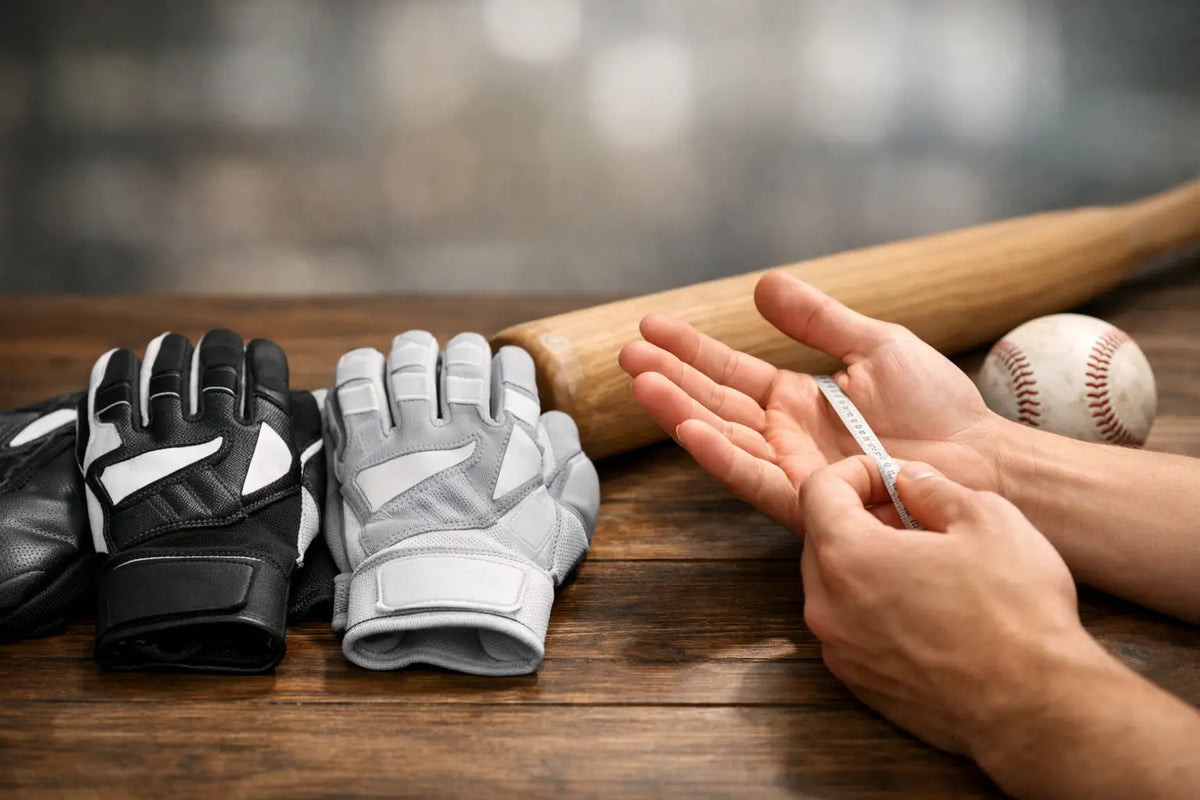
The fastest way to reduce blisters is to fix the fit. Batting gloves should feel snug without cutting off movement. You want a secure wrap through the palm and fingers, with no bunching when you close your hand around the bat.
If there is extra material in the palm, that fabric can fold and rub every swing. If the fingertips are jammed, the glove may pull against your skin and create pressure where you do not want it. A proper fit should feel like control, not compression.
For younger players, this gets missed all the time. Parents often buy a little room to grow into, but oversized batting gloves can create more friction than protection. A glove that fits now is usually the better move, especially if the player is taking regular reps.
Material also changes the feel. Leather palms tend to offer a more connected grip and can soften into the hand over time, but they need care and can stiffen if soaked with sweat and left in a bag. Synthetic options can be lighter and easier to maintain, but some players notice they hold heat differently. It depends on how often you hit, how much you sweat, and what feel you like at contact.
Sweat is a bigger problem than most players think
Dry skin handles friction better than wet skin. Once your hands get sweaty, the glove interior gets slick, the bat handle can move more, and your skin becomes easier to irritate. That is a bad mix in batting practice, especially in summer.
If blisters keep showing up, moisture control needs to be part of the plan. Start with clean, dry hands before you put gloves on. If your gloves are already damp from the last round, let them air out instead of putting them right back on. Rotating between two pairs can help players who hit often, because one pair can dry while the other is in use.
Some players do better with a little rosin or grip support, but too much tack can create another issue. If the handle sticks while your hand still shifts inside the glove, you are adding drag right against the skin. The goal is controlled grip, not glue.
Your bat grip can either help or hurt
One of the most overlooked answers to how to prevent batting glove blisters is the handle itself. A worn-out grip, slick tape job, or rough surface can chew through gloves and hands in a hurry. If the handle feels inconsistent, your hands will compensate, usually by squeezing harder.
That extra tension increases pressure on the same trouble spots every swing. A comfortable, stable grip lets you stay loose and explosive without overworking the hands. The right thickness matters too. If the handle feels too thin, some players clamp down harder. If it feels too bulky, hand placement can get awkward.
This is one of those it depends situations. Different players like different handle feel. What matters is repeatable comfort. If your hands are fighting the bat, blisters are more likely.
Swing habits that create hot spots
Sometimes the glove is fine and the swing is the issue. Players who death-grip the bat from load to finish usually put more stress on their palms and fingers than they need to. The same goes for hitters whose hands roll, slide, or re-grip during the swing.
That does not mean you need to rebuild your mechanics just because you got a blister. It does mean the blister location can tell you something. If you always get one in the same spot, pay attention to where the handle is moving and how your pressure changes through contact.
A hitting coach can help if the pattern keeps repeating. Often the adjustment is small - a more relaxed grip, cleaner hand path, better knob control. Small changes matter when you are taking hundreds of swings.
Break in gloves before heavy use
Brand-new batting gloves can feel great in the store and still need a little break-in time. Stiffer palms and seams may rub more during the first few sessions, especially if you go straight into a long cage workout.
Instead of wearing a new pair for a marathon hitting day, use them in shorter rounds first. Let the glove shape to your hand. Watch for any spot that feels rough, raised, or stiff. A glove should start feeling more natural with use, not worse.
If it keeps rubbing in the same place after a few sessions, that is usually a fit or construction issue, not a break-in issue. Do not try to tough it out if the glove is clearly working against you.
Simple prevention moves that actually work
Most players do not need a complicated routine. They need consistency. Keep your gloves clean, let them dry between uses, and replace them before the palm is slick and beaten down. If you already know where you blister, a small piece of athletic tape or a blister patch on that hot spot before practice can save your hand.
Trim calluses if they get thick and raised. A smooth callus can protect the skin, but a thick one can tear and become a bigger problem. Hand care sounds minor until your batting practice gets cut short because every swing hurts.
This also applies to volume. If you go from no swings to a huge weekend of cage work, your skin may not be ready for that load even if your glove setup is solid. Build up reps the same way you build up throwing or lifting. Your hands need time to adapt.
How to prevent batting glove blisters during a long season
In season, blister prevention becomes maintenance. Check your gloves the way you check the rest of your gear. Look at the palm wear, finger seams, and wrist closure. If the glove feels stretched out or the material has gone smooth and slippery, it may be time for a fresh pair.
It also helps to have a game pair and a practice pair if you hit often. That keeps your better pair from getting burned up too fast and gives you more consistent feel when it counts. Players who want performance and style do not need to choose one or the other. The best setup is gear that looks sharp and holds up when the reps pile on.
Vi Athletics is built around that idea - quality gear that shows up ready to work.
When a blister means something else
Most batting glove blisters are simple friction problems, but not all hand pain is the same. If the skin keeps tearing, if one area is getting crushed instead of rubbed, or if you feel numbness along with the irritation, the issue may be grip size, handle shape, or hand placement rather than the glove alone.
And if a blister opens, raw skin changes everything. At that point, prevention becomes protection. Clean it, cover it, and give it the right time to settle down. Playing through it without managing it usually makes the next few days worse.
Strong hands are part of being game-ready. Keep the fit right, keep the moisture down, and pay attention to what your gear and swing are telling you. A better feel at the plate starts before the first pitch.